The situation

A month into the role, AdvanceQuip had four CASE excavator models with high stock levels, a sector slowing down and growing price competition. Awareness of AdvanceQuip itself was limited, some buyers worried about servicing outside the branch areas, the budget was tight, and the legacy website restricted what we could build and track.

What I noticed

Spec sheets were not going to move the stock: every dealer had specs. In a price-sensitive market, buyers were really asking what the machine would cost them each month, and whether they could trust who they were buying from.

What I did

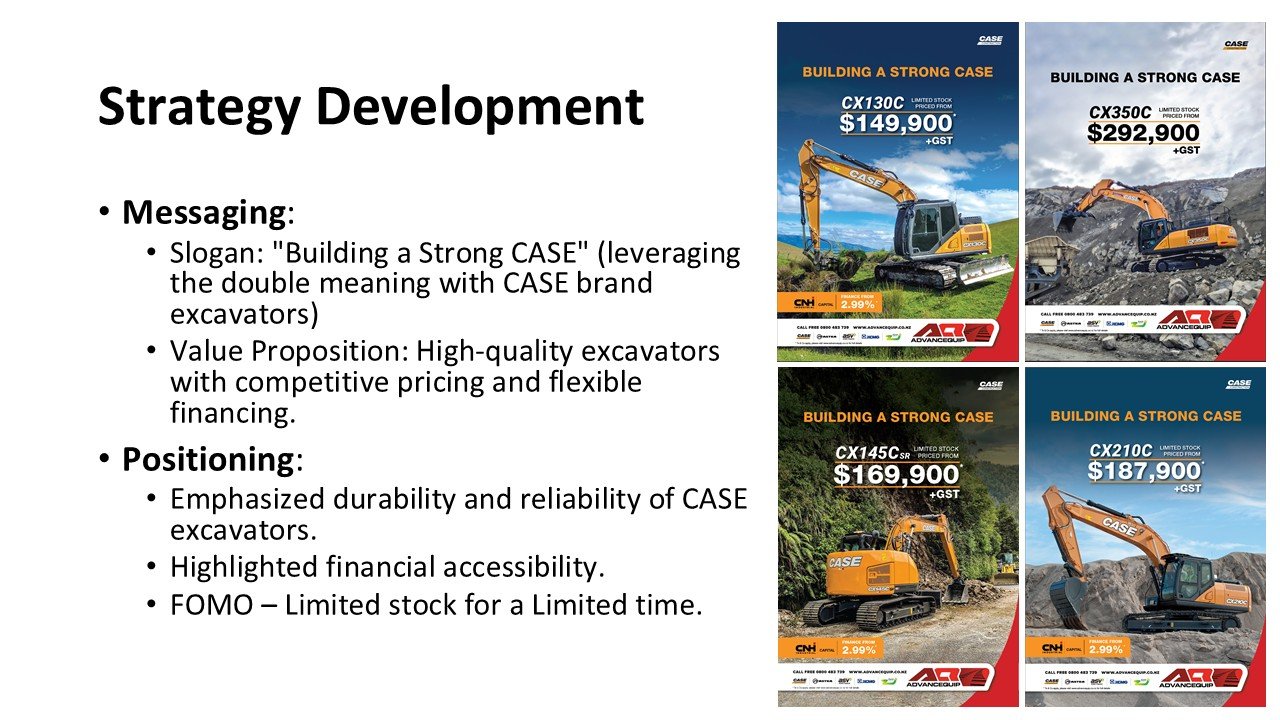
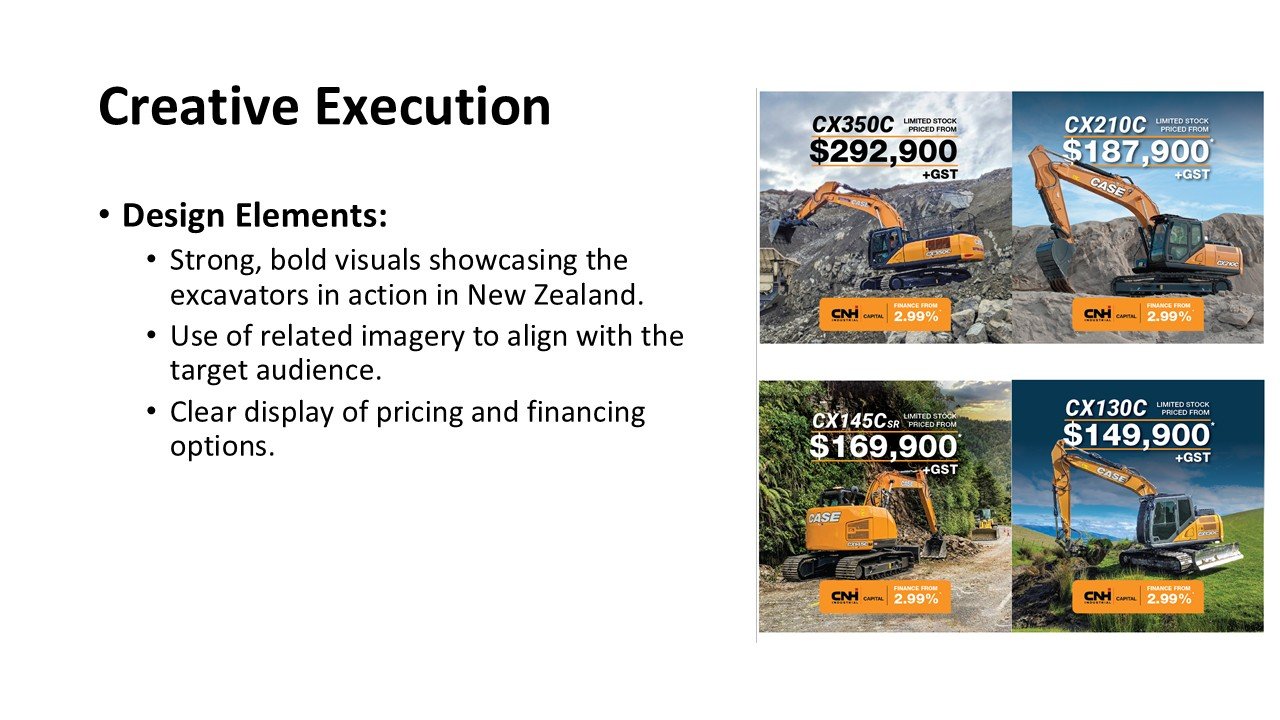
  • Paired the machine with price and finance. “Building a Strong Case” connected the CASE name to a practical purchase proposition, with price and finance shown alongside the machine in every placement.
  • Made it local and on-brand. Creative used machinery in local settings and kept AdvanceQuip’s established branding, answering the awareness gap the sales team had flagged.
  • Adapted one idea across every format. Print advertisements, digital banners, social graphics and promotional video all carried the same recognizable offer.
  • Changed the campaign as the stock changed. When the two smaller models sold out, I stopped their ads and extended the finance message across the CASE range, then built a follow-on campaign on the same offer.
  • Coordinated the delivery. I worked with internal colleagues, CASE, service centres, media and printers, and added a landing page with product information and contact options.

Selected campaign material

The brief, the offer and the decision to adapt the campaign. The full presentation is below.
Campaign overview
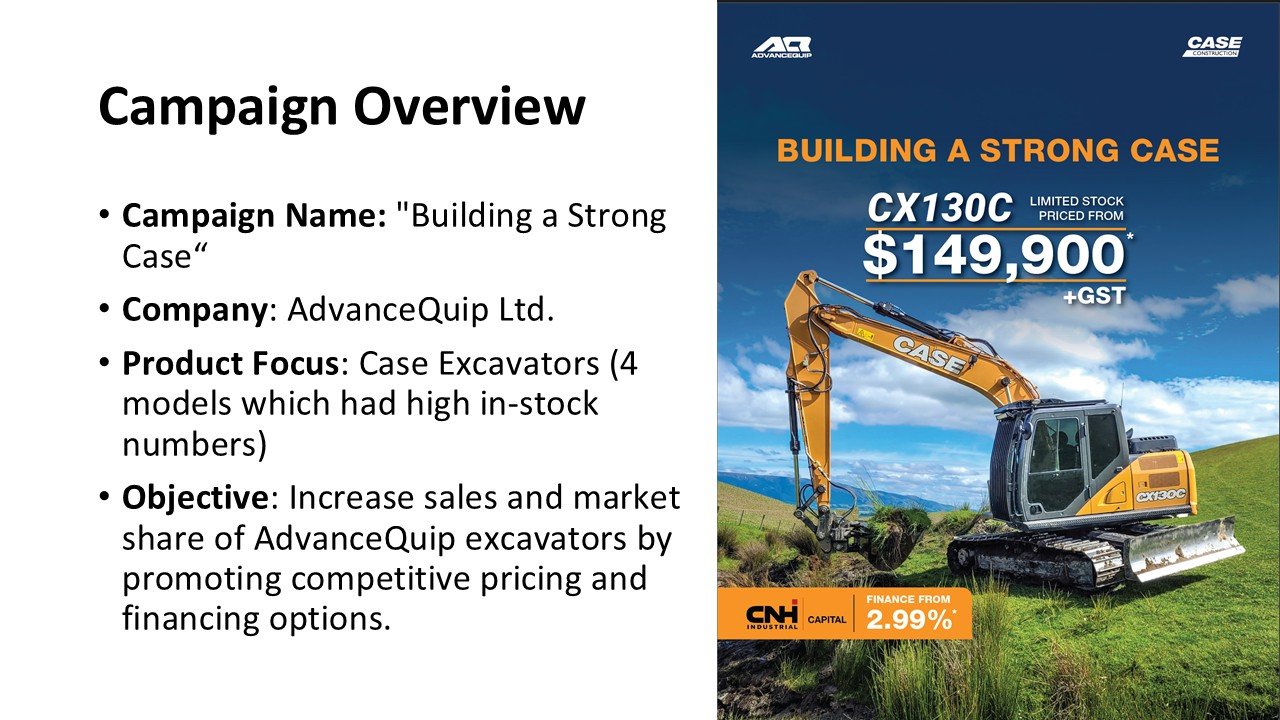
The brief focused on four CASE excavator models with high stock levels, using competitive pricing and finance to support sales.
Offer and positioning
The concept paired CASE brand credibility with price, finance and limited-stock messaging.
Creative direction
Creative used machinery in local settings with prominent pricing and finance information.
Stock changes and campaign expansion
When the two smaller models sold out, their ads stopped and the finance message extended across the CASE range.

What happened

The campaign report I presented recorded 50% sales growth and 250 qualified leads, against targets of 25% sales growth and 100 qualified leads, with 23,000 landing-page visits in a single month.

What I’d bring to your team

Campaigns that start from the commercial problem, not the channel plan, and keep adjusting as the business situation changes.

The original presentation

The 20-slide deck as I presented it. The text version below summarizes each slide.
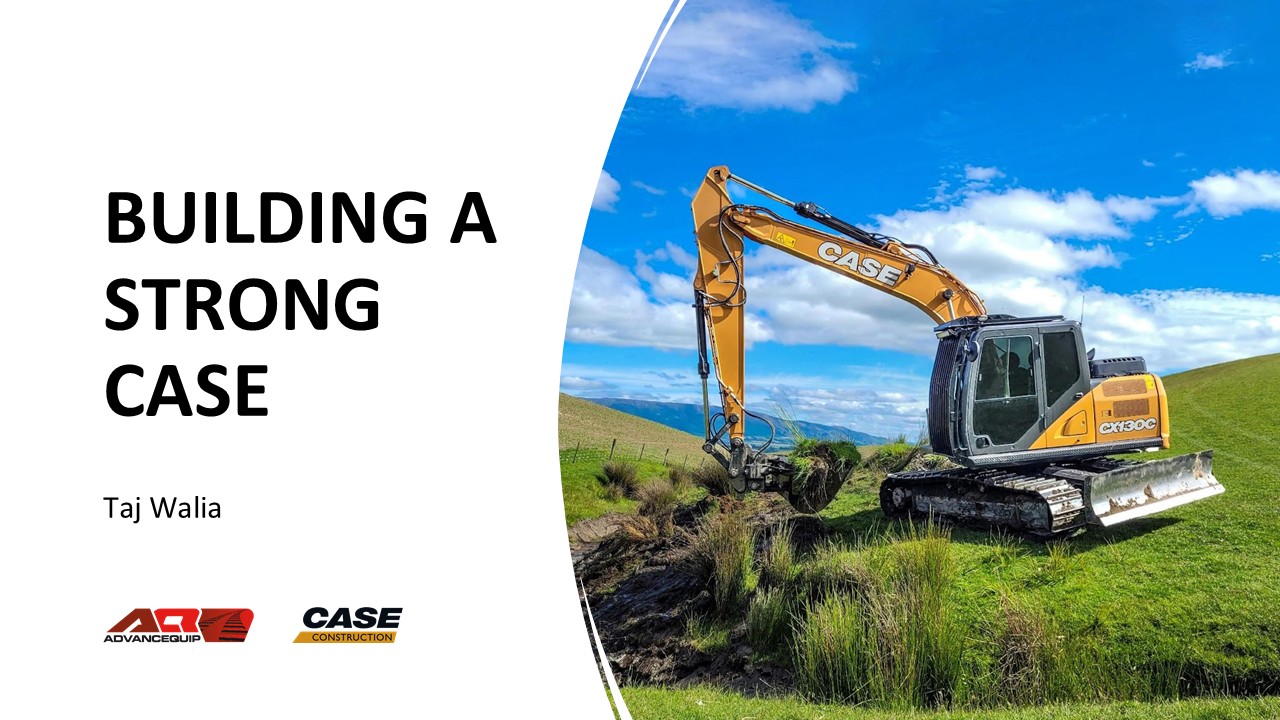
Campaign introduction

Building a Strong Case, presented by Taj Walia for AdvanceQuip and CASE.

Read the presentation as text

1. Campaign introduction

Building a Strong Case, presented by Taj Walia for AdvanceQuip and CASE.

2. Campaign overview

The brief focused on four CASE excavator models with high stock levels, using competitive pricing and finance to support sales.

3. Commercial context

The deck describes a sector slowdown, pricing competition and the need for dependable machines at an accessible cost. Taj was about a month into the role.

4. Budget and website constraints

Constraints included brand awareness, servicing concerns outside branch areas, limited budget and restrictions on the legacy website and tracking.

5. Brand and sales requirements

The creative requirements included local machinery imagery and continuity with AdvanceQuip branding. Sales feedback highlighted limited awareness of the business and its range.

6. Objectives

The presentation set targets of 25% sales growth, 40% inquiry-related website traffic growth and 100 qualified leads.

7. Target audience

The initial audience was smaller construction businesses and independent contractors. The campaign later expanded to larger machines and their buyers.

8. Offer and positioning

The concept paired CASE brand credibility with price, finance and limited-stock messaging.

9. Creative direction

Creative used machinery in local settings with prominent pricing and finance information.

10. Content production

Deliverables included print advertisements, banners, social graphics and promotional video. The deck also records AI voiceover and parallax treatment.

11. Creative examples

Visual examples of developing the campaign creative.

12. Format adaptations

Examples of adapting artwork to different formats and placement requirements.

13. Campaign artwork

Campaign artwork from the original presentation.

14. Advertisements

Advertisements from the original presentation.

15. Landing page and coordination

The later campaign material describes a landing page with product information and contact options, plus coordination with internal teams, CASE, service centres, media and printers.

16. Four-week campaign timeline

The deck describes four stages: planning and approvals, launch, expansion and budget reallocation, then monitoring and follow-up.

17. Results

The campaign report recorded 50% sales growth, 250 qualified leads, 400% growth in website visits, 23,000 landing-page visits in a month and 500% growth in engagement.

18. Stock changes and campaign expansion

When the two smaller models sold out, their ads stopped and the finance message extended across the CASE range.

19. Follow-on campaign

Creative for the follow-on campaign, building on the initial offer.

20. Closing slide

The original presentation closes with a thank-you slide.