The challenge
The Gift Group runs three distinct D2C gifting brands: Giftbox Boutique, Little & Luxe, and Gather and Graze. Gifting is a brutal category for lifecycle marketing: revenue concentrates hard around Christmas and gifting occasions, the customer buying for a colleague in November is not the customer buying a baby hamper in March, and each of the three brands speaks to a different buyer with a different voice.
Paid channels get expensive in exactly the weeks a gifting brand needs them most. The owned channels, email and SMS, are where the margin lives. They needed to work harder, across all three brands at once, without the lists burning out.
How the strategy was built
Gifting demand is occasion-driven, so the research began with the calendar: purchase history showed exactly how revenue concentrated around Christmas, Mother's Day and corporate gifting season, and browsing data showed how far ahead each buyer type started looking. Behavioural analysis then separated the segments that mattered, corporate bulk buyers, repeat gifters, first-time browsers, because each arrives with different intent, budget and urgency, and a "10% off" that converts one is noise to another.
Each brand also held its own position: Giftbox Boutique, Little & Luxe and Gather and Graze speak to different buyers in different voices, so flows and campaigns were built per brand on shared machinery, distinct on the surface, efficient underneath.
What I did
- Built and maintained the full Klaviyo flow architecture. Welcome series, abandoned cart, browse abandonment, post-purchase, and win-back sequences for each brand, each written in that brand's voice and triggered on behavioural data, not guesswork.
- Ran the email and SMS calendar across all three brands. The hard discipline in gifting: balancing send frequency against list fatigue through the December peak, so revenue per campaign stayed strong without unsubscribes climbing.
- Segmented on behaviour, not demographics. A corporate bulk buyer, a repeat gifter and a first-time browser each got different offers, different timing and different products, the segmentation built directly on purchase and browsing behaviour.
- Owned the storefront side of conversion too. Hands-on Shopify UX and CRO work in HTML, CSS and JavaScript, so the traffic email generated landed on pages built to convert it.
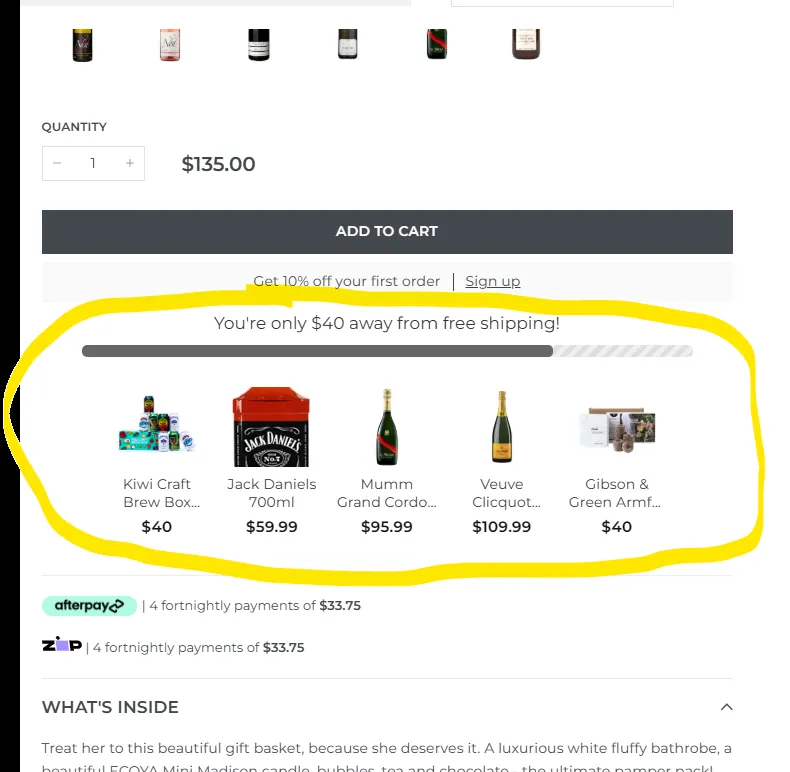
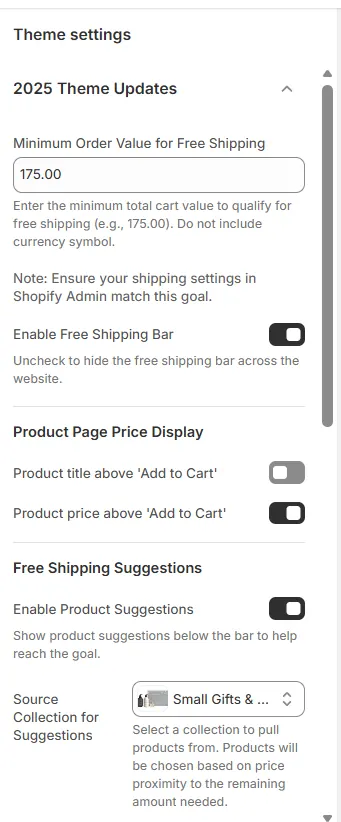
- Built conversion features directly into the theme. A free-shipping progress bar with smart product suggestions, items priced to close the remaining gap, coded as a configurable Shopify theme setting, a permanent, merchant-controlled lift to average order value.
- Coordinated the paid layer around it. Meta and Google campaigns timed with the lifecycle calendar, with external agency partners managed against clear briefs.
The work itself
The hands-on side, a conversion feature I built directly into the Shopify theme:


The feedback loop
Email gives you a feedback loop most channels can't: every send is a test. Subject lines, send times, offer framing and product selections were compared campaign against campaign, flow metrics, open, click, conversion, reorder, were reviewed weekly, and unsubscribe rates acted as the early-warning system through the December peak, when the temptation to over-send is strongest. The lifecycle system that came out of a year of that iteration converts better than anything a launch-day plan could have specified.
The results
- A complete, always-on lifecycle system across three brands, from first visit to repeat purchase
- Peak-season sends managed through the December concentration without list burnout
- Behavioural segmentation that let three small lists work like much bigger ones
- An owned-channel engine that reduced dependence on paid acquisition in peak weeks
Why it matters
Lifecycle email is where I've spent the deepest hours of my career: the flows, the copy, the segmentation logic and the metrics that matter, open rate, click rate, conversion, reorder frequency and customer lifetime value. The platform principles carry anywhere: my depth is Klaviyo, and I've moved between platforms before without losing momentum. For the retention story across a much bigger portfolio, see the 20% retention lift at Active Safety.